
CFD Trading Appeals to South Koreans Who Want Global Market Exposure
South Korean retail investors have traditionally focused largely on domestic instruments, as evidenced by their consistent participation in the domestic equity market and their strong regulatory familiarity and confidence. The KOSPI and KOSDAQ offer investment opportunities in companies that Korean investors know not only through business but also through everyday consumption, providing an investment environment that feels concrete rather than abstract. During periods of relatively strong performance by Korean companies, that concentration has served Korean retail investors well, but the concentrated risk of a single economy’s market cycle has also become more apparent during periods of stress in the Korean equity market.
Korean investors exploring global diversification are increasingly turning to CFD trading as a means of accessing international markets, particularly those denied by the domestic brokerage infrastructure. Opening an international equity account through Korean brokers introduces regulatory considerations, currency conversion costs, and settlement processes that make the exercise more cumbersome than it appears when first considered as a diversification move. Access to US technology stocks, European indices, commodity markets, and currency pairs within a single account relationship, without the administrative burden of maintaining multiple international brokerage relationships, aligns more closely with investors’ primary objective of gaining global market exposure without direct ownership of the underlying assets than the options provided by the conventional broker system.
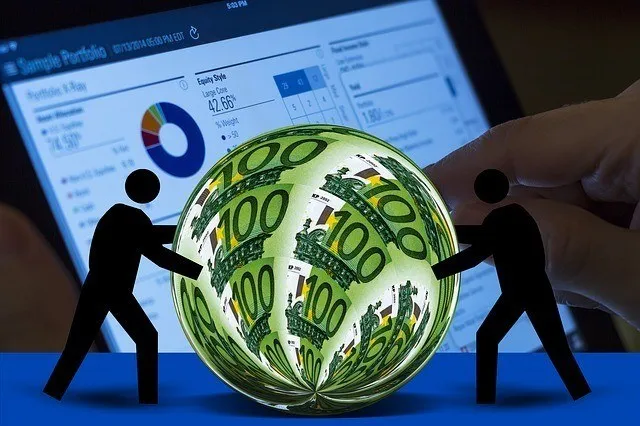
Image Source: Pixabay
Korean traders approaching global markets through CFDs carry an analytical advantage rooted in the semiconductor industry’s central role in the Korean economy. An investor with direct experience in the Korean semiconductor industry or its supply chain, spanning Korean component manufacturers, TSMC, and major US chip designers, approaches CFD positions on semiconductor instruments with contextual depth that outside investors cannot readily develop. That expertise leads to more realistic assessments of how capacity announcements, demand estimates, and geopolitical developments affecting the semiconductor supply chain translate into price movements for these instruments. With the CFD structure accessible through international platforms, Korean traders can engage meaningfully with a market they understand well, one that the domestic brokerage system is not as efficient at supporting.
One important point to take into consideration when trading with CFDs is that the efficiency in the use of funds it provides can lead to losses greater than the amount risked if the trading is not conducted within a strict risk management framework. Conservative saving and investment patterns are prevalent among Korean households, and some investors may think their risk tolerance is similar to that of CFD positions, but it is not necessarily the case. The FSS’s regulations on risk disclosure and the information that licensed operators are required to provide investors on the Korean retail market about CFDs mitigate this concern, as the investors are made aware of the leverage component prior to investment in the CFD product.
Korean investors’ analytical approach tends to reflect the fundamentals-driven orientation that underpins Korean equity investment, where company-level analysis and industry understanding drive most decisions. In global markets, that orientation must expand to encompass the specific drivers, regulatory environments, and competitive dynamics of international markets, considerations that do not arise in domestic equity analysis. Korean traders who have made this transition describe a learning curve that involved developing a genuine understanding of how various global markets operate, what motivates their respective instruments, and how to adapt an analytical framework built around the Korean market to the different characteristics of instruments accessed via CFD trading.
Whether that bridge benefits individual investors depends on several factors: genuine familiarity with the instrument’s characteristics, the discipline to manage risk within the leverage it affords, and the analytical capacity to understand the global markets being accessed rather than assuming that domestic investment instincts transfer directly to the different terrain of international instruments, making CFD trading a tool whose value is determined less by its accessibility than by the preparation the investor brings to it.

Comments